

Weeping Mulberry
Click here for Mulberry Care Guide
Morus alba – Weeping Mulberry
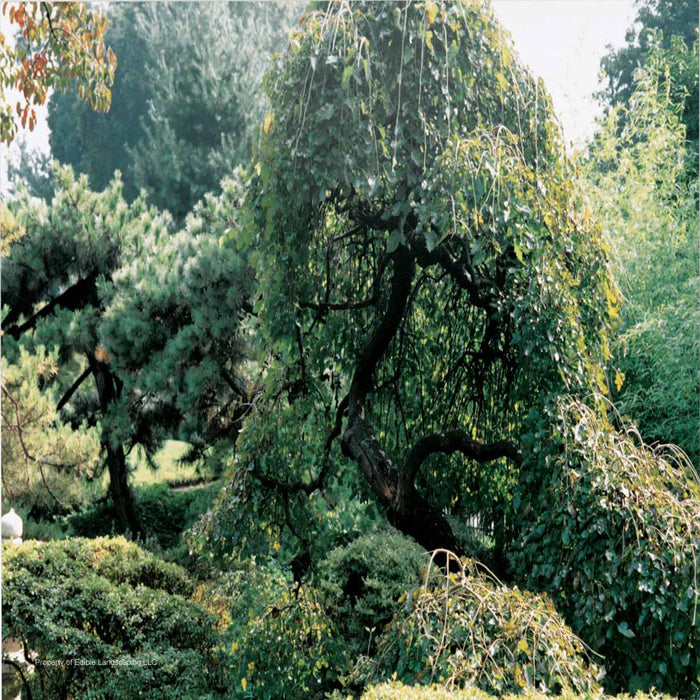
A black‑fruiting weeper – a weeping (pendulous) form of white mulberry that combines edible fruit with a graceful, small‑tree habit. The fruits are very sweet, though somewhat smaller than those of some other mulberry varieties. Young trees benefit from staking and training upward during the first few years to reach a desired mature tree form. When mature, this weeper stays modest in size: about 12 ft tall and wide in many settings, making it suitable for small gardens or tighter landscape spaces. Space trees in a 10–12 ft circle to allow room for canopy spread. Hardy in USDA Zones 3–9.
Plant Characteristics
- Pest Resistance: Excellent
- Disease Resistance: Very Good
- Drought Tolerance: Good (once established)
- Heat Tolerance: Very Good
- Humidity Tolerance: Good
- Sun Tolerance: Very Good — thrives in full sun (can tolerate some part shade)
- Wet Soil Tolerance: Fair — prefers well‑drained or moderately drained soils
- Shade Tolerance: Good (but fruiting and vigor are best with adequate sun)
- No‑Spray Suitability: Good — generally low maintenance and not disease/pest prone
- Salt Tolerance: Fair — tolerates some soil variation, but not ideal for heavy salt exposure
- Fresh-for-Kids (edible quality): Good — fruit is sweet and appealing for fresh eating or preserves
- Deer Resistance: Poor — fruit and foliage may attract deer or other animals
- Thorns: No — easy to harvest and maintain without risk of punctures
- Plant Type: Tree (small/medium-sized, weeping habit)
- Soil Type: Adaptable — tolerates a variety of soils, though well‑drained or moderately drained soils are preferred
- Edible Type: Fruit (mulberries)
- Self-Fertile: Yes — will produce fruit without need for a second tree
This information is accurate to the best of our knowledge. Comments and observations from growers are welcome.